50 Things Every Race Director Must Plan Before Race Day
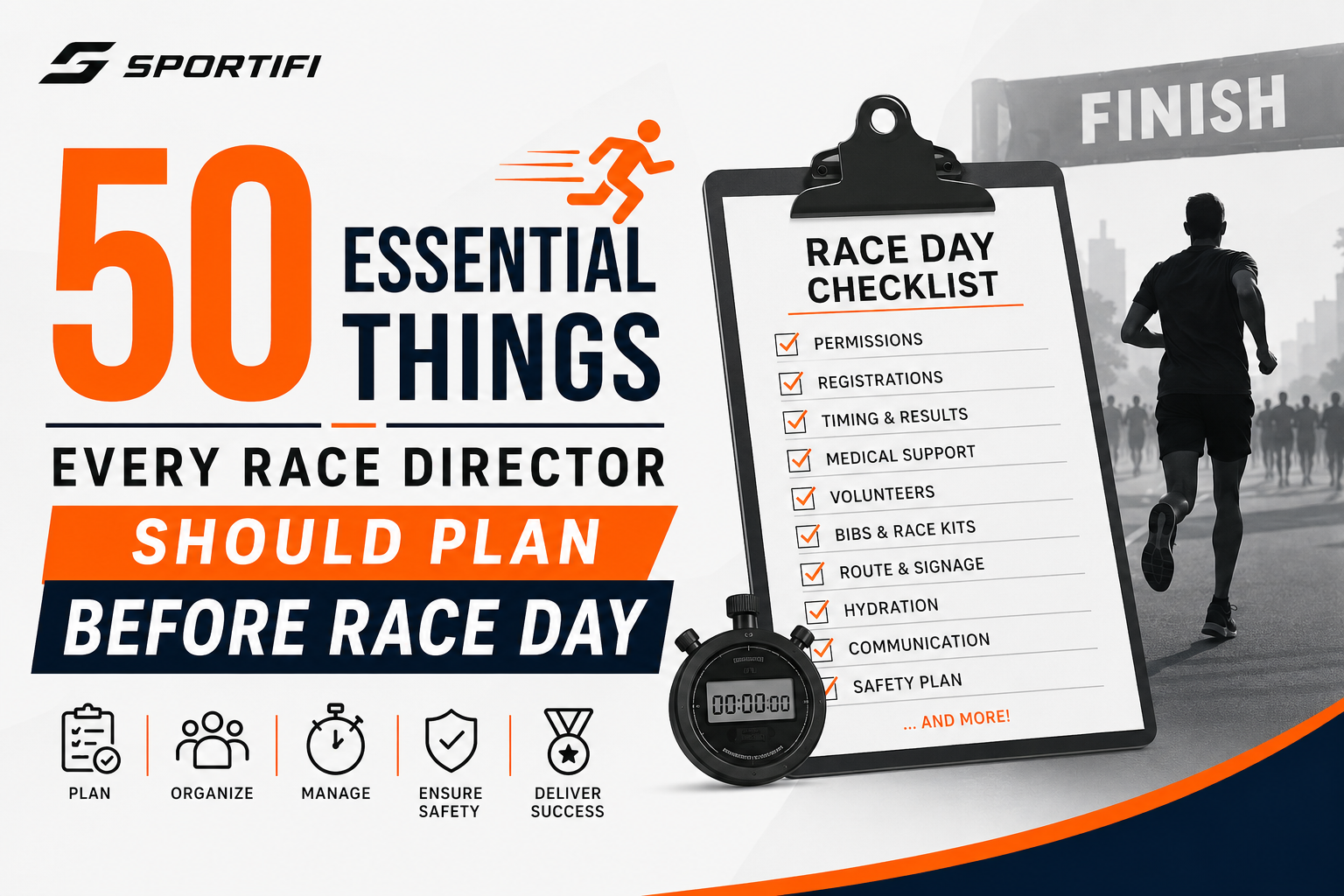
Organizing a successful marathon or running event requires more than just selecting a venue and opening registrations. From permissions, race timing, volunteer management, and medical support to participant communication and post-race certificates, every detail plays a crucial role. In this comprehensive guide, we cover 50 essential things every race director should plan before race day to deliver a safe, professional, and memorable event. Whether you're organizing your first 5K or a large-scale marathon, this checklist will help you stay organized, reduce risks, and create an exceptional experience for every participant.
The Ultimate Checklist for Organizing a Successful Running Event
Introduction
Behind every successful marathon, cycling event, fun run, or trail race is a race director who has spent weeks—or even months—planning every detail. While participants see the excitement of race day, organizers are managing logistics, volunteers, safety, technology, communication, and countless moving parts.
Missing even one important task can lead to delays, participant dissatisfaction, or safety concerns. Whether you're organizing your first community run or managing a large-scale marathon, having a structured plan is essential.
This checklist covers 50 key areas every race director should review before race day to help deliver a safe, professional, and memorable event.
1. Finalize Event Objectives
Clearly define the purpose of the event. Is it competitive, recreational, charity-focused, corporate, or community-based? Your objectives will guide every planning decision.
2. Confirm Event Date
Avoid clashes with public holidays, festivals, elections, or other major local events that could affect participation or traffic management.
3. Obtain Required Permissions
Secure approvals from local authorities, police, municipal bodies, park authorities, and any other agencies responsible for your venue and route.
4. Confirm Event Insurance
Review insurance requirements for public liability, participant coverage, volunteers, and event infrastructure.
5. Finalize the Race Route
Inspect the course carefully. Check road conditions, elevation, turns, hazards, and spectator areas.
6. Measure the Course Accurately
Ensure the distance is measured correctly so participants receive accurate race results.
7. Plan Traffic Management
Coordinate road closures, diversions, parking areas, and traffic control with local authorities.
8. Prepare Emergency Response Plans
Document procedures for medical emergencies, severe weather, lost participants, and evacuation if required.
9. Arrange Medical Support
Confirm ambulances, doctors, first-aid stations, and emergency contacts.
10. Recruit and Train Volunteers
Assign clear responsibilities for registration, hydration stations, finish line management, route guidance, and participant support.
11. Finalize Registration Data
Verify participant information, emergency contacts, and category selections.
12. Test Online Registration
Ensure registrations, payments, confirmation emails, and participant dashboards are working correctly.
13. Verify Payment Records
Confirm all successful payments and resolve any pending or failed transactions.
14. Generate Registration IDs and BIB Numbers
Assign unique registration IDs and BIB numbers where applicable.
15. Print BIBs
Double-check names, categories, QR codes, sponsor logos, and emergency contact information.
16. Prepare Race Kits
Include BIBs, safety pins, timing chips (if applicable), event guides, sponsor materials, and participant gifts.
17. Plan Kit Distribution
Decide whether kits will be distributed before race day or on-site.
18. Confirm Race Timing Services
Ensure timing equipment, RFID readers, backup devices, and technical staff are ready.
19. Test Timing Equipment
Conduct a mock test to verify timing accuracy and live result systems.
20. Prepare Start and Finish Areas
Plan entry points, start arch, finish chute, recovery zone, and crowd movement.
21. Install Directional Signage
Place clear signs for parking, registration, washrooms, baggage, medical support, hydration, and race routes.
22. Arrange Hydration Stations
Determine locations, staffing, water quantities, and waste disposal plans.
23. Organize Nutrition Support
Provide energy drinks, fruits, or snacks where appropriate for the event distance.
24. Plan Waste Management
Arrange bins, cleanup crews, and environmentally responsible disposal practices.
25. Set Up Baggage Counter
Implement a secure baggage collection and return process.
26. Verify Public Address System
Test microphones, speakers, announcements, and backup power.
27. Prepare the Stage and Podium
Ensure award presentations and ceremonies can proceed smoothly.
28. Coordinate Photography and Videography
Assign photographers to key locations including the start, finish, and podium.
29. Test Internet Connectivity
Reliable internet is essential for live registrations, payment verification, and result publishing.
30. Prepare Backup Power
Arrange generators or UPS systems for timing equipment, registration desks, and sound systems.
31. Review Communication Plan
Ensure participants know event schedules, reporting times, parking arrangements, and contact information.
32. Send Final Participant Instructions
Share race-day guidelines via email, SMS, or WhatsApp a few days before the event.
33. Confirm Vendor Arrivals
Verify arrival times for timing teams, photographers, medical staff, caterers, and equipment suppliers.
34. Check Sponsor Branding
Install banners, flags, backdrops, and promotional materials according to sponsor agreements.
35. Prepare Media Coverage
Coordinate with media representatives and prepare press kits if required.
36. Review Weather Forecast
Develop contingency plans for extreme heat, heavy rain, or poor air quality.
37. Inspect the Venue
Conduct a final walkthrough to identify hazards or last-minute adjustments.
38. Verify Volunteer Attendance
Ensure every volunteer knows their reporting time and assigned responsibilities.
39. Conduct Team Briefing
Meet with staff, volunteers, vendors, and officials to review the event schedule and emergency procedures.
40. Test QR Code Check-In
Verify participant check-in systems before registration opens.
41. Prepare Live Results
Confirm leaderboards, participant search, and result publishing systems.
42. Verify Certificate Generation
Ensure finisher certificates can be generated accurately after the race.
43. Prepare Award Categories
Confirm overall winners, age-group awards, team awards, and special recognitions.
44. Organize Security Personnel
Deploy security teams at entrances, finish areas, parking zones, and crowded locations.
45. Review Crowd Flow
Plan participant movement to minimize congestion at registration, baggage counters, hydration stations, and the finish line.
46. Prepare Lost & Found Procedures
Set up a dedicated help desk for lost belongings and participant assistance.
47. Keep Backup Supplies Ready
Stock extra BIBs, safety pins, water bottles, timing tags, batteries, extension cables, and stationery.
48. Assign Decision Makers
Clearly define who is responsible for operational decisions, medical emergencies, technical issues, and media communication.
49. Conduct a Final Readiness Check
Review every department using a standardized checklist to ensure nothing has been overlooked.
50. Enjoy the Event
Once the race begins, trust your planning, support your team, and focus on delivering a memorable experience for every participant.
How Technology Can Simplify Race Day Planning
Managing registrations, payments, participant data, communications, timing, certificates, volunteers, and reports across multiple tools can become overwhelming.
An integrated event management platform helps organizers centralize these activities, reducing manual work and improving coordination.
With a single system, organizers can:
Manage online registrations
Process secure payments
Generate registration IDs and BIBs
Send automated Email, SMS, and WhatsApp updates
Coordinate volunteers
Publish race results
Generate digital certificates
Monitor event analytics
Maintain participant records
Using one connected platform also minimizes data duplication and helps teams work more efficiently.
How Sportifi Can Help
Sportifi is designed to support sports event organizers with a comprehensive set of tools for managing events from planning through post-race reporting.
Depending on your event's requirements, Sportifi can assist with:
Event Registration
Participant Management
QR Code Check-In
BIB Management
Communication Automation
Volunteer Coordination
Live Dashboards
Reporting & Analytics
Digital Certificates
Knowledge Base
Organizer Tools
For organizers who require professional timing support, Sportifi Timing Services are also available for selected events. If you already work with a preferred timing provider, Sportifi aims to integrate with compatible timing systems wherever possible, allowing you to continue using your trusted partner while benefiting from a centralized event management platform.
Final Thoughts
A successful race is the result of careful preparation, clear communication, and attention to detail. While every event is unique, this 50-point checklist provides a practical framework for reducing risks and improving the participant experience.
By combining thorough planning with the right technology and trusted partners, race directors can focus less on operational challenges and more on creating safe, enjoyable, and memorable events that participants look forward to returning to year after year.