How to Choose the Right Race Timing
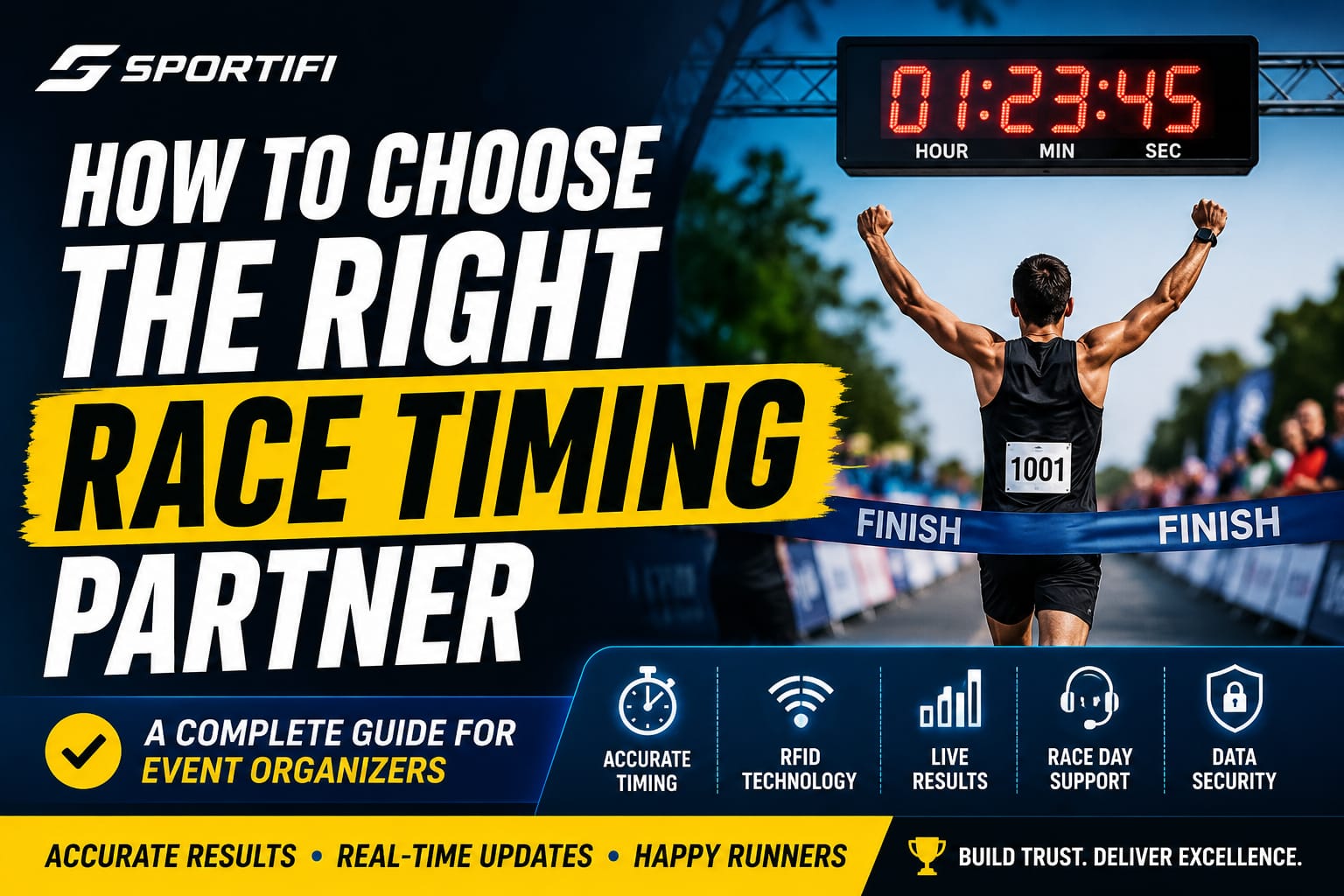
Choosing the right race timing partner is essential for delivering a successful and credible sporting event. This guide covers everything event organizers need to know—from RFID timing technology and live race results to race-day support, data security, and online result management—helping you select a reliable timing partner that ensures accuracy, efficiency, and an exceptional runner experience.
Whether you're organizing a 5K charity run, a city marathon, a cycling event, or a triathlon, one factor can make or break your event's credibility—accurate race timing.
Participants expect precise results, real-time updates, and a seamless race-day experience. That's why choosing the right race timing partner is one of the most important decisions an event organizer can make.
In this guide, we'll explore the key factors to consider before selecting a race timing company.
Why Race Timing Matters ?
Race timing is more than just recording finish times. A professional timing partner ensures:
Accurate start and finish timings
Live race results
Fair rankings
Instant SMS and email notifications
Online result publishing
Data security
A smooth participant experience
Poor timing can lead to disputes, negative reviews, and loss of trust among runners.
1. Experience in Managing Events
Choose a timing partner with experience handling different types of events, such as:
Marathons
Half Marathons
Ultra Runs
Trail Runs
Cycling Events
Walkathons
Corporate Fitness Events
An experienced team knows how to manage unexpected situations on race day.
2. RFID Timing Technology
Modern races should use RFID (Radio Frequency Identification) technology for accurate results.
Look for features like:
Disposable or reusable RFID chips
UHF timing systems
Multiple timing checkpoints
Backup timing equipment
High read accuracy
Real-time data capture
Reliable hardware minimizes missed reads and ensures every participant receives an accurate result.
3. Real-Time Results
Today's runners expect instant gratification.
A good timing partner should provide:
Live leaderboard
Live participant tracking
Instant provisional results
Mobile-friendly result pages
Finish notifications via SMS and email
Real-time updates also enhance the spectator experience.
4. Registration Platform Integration
The timing company should integrate smoothly with your registration system.
Essential capabilities include:
Automatic participant synchronization
BIB assignment
QR code generation
Digital waiver management
Category mapping
Payment status verification
This reduces manual work and minimizes registration errors.
5. Comprehensive Race-Day Support
Technology alone isn't enough. Ensure the timing company provides an experienced on-ground team for:
Start line setup
Finish line management
Timing mat installation
BIB verification
Chip distribution
Technical troubleshooting
Backup equipment
A professional support team keeps the event running smoothly.
6. Accuracy and Reliability
Ask questions such as:
What is the timing accuracy?
How many backup systems are available?
What happens during a power failure?
How is data backed up?
How are missing chip reads handled?
Reliable timing partners always have contingency plans.
7. Online Results and Certificates
Participants love receiving results immediately after the race.
Look for features like:
Instant online results
Downloadable certificates
Age category rankings
Overall rankings
Split timing
Pace calculations
Personal result pages
These features enhance the runner's post-race experience.
8. Data Security
Participant information includes sensitive personal data.
Choose a timing company that ensures:
Secure cloud storage
Regular data backups
Encrypted databases
Privacy compliance
Controlled access to participant information
Data security is essential for maintaining participant trust.
9. Custom Reporting
Organizers often need detailed reports for sponsors and event analysis.
Useful reports include:
Category-wise results
Gender statistics
Age-group analysis
DNF reports
Attendance reports
Finish rate analysis
Performance insights
These reports help improve future events.
10. Customer Reviews and Reputation
Before making a decision:
Check Google Reviews
Read testimonials
Ask for previous event references
Review past event portfolios
Speak with previous organizers
A proven track record is often the best indicator of quality.
Questions to Ask Before Hiring
Before signing a contract, ask:
Which timing technology do you use?
How many events have you timed?
Do you provide live tracking?
Is backup equipment included?
How quickly are results published?
Can participants download certificates?
Do you provide race-day technical support?
What happens if equipment fails?
Their answers will reveal their professionalism and preparedness.
Red Flags to Watch For
Avoid companies that:
Cannot explain their timing process
Have no backup systems
Offer unusually low prices without justification
Lack previous event experience
Have poor communication
Cannot provide client references
Choosing solely based on price can lead to costly mistakes on race day.
Final Thoughts
Your race timing partner is more than just a service provider—they are a key contributor to your event's success. Accurate timing, reliable technology, experienced support, and excellent participant services all contribute to a memorable race experience.
Take the time to evaluate potential partners based on experience, technology, reliability, and customer support rather than cost alone. Investing in a trusted timing partner helps build your event's reputation and encourages runners to return year after year.
Ready to deliver a world-class race experience? Choose a race timing partner that combines advanced RFID technology, real-time results, dependable race-day support, and a proven track record of successful events. The right partnership can turn a good event into an unforgettable one.