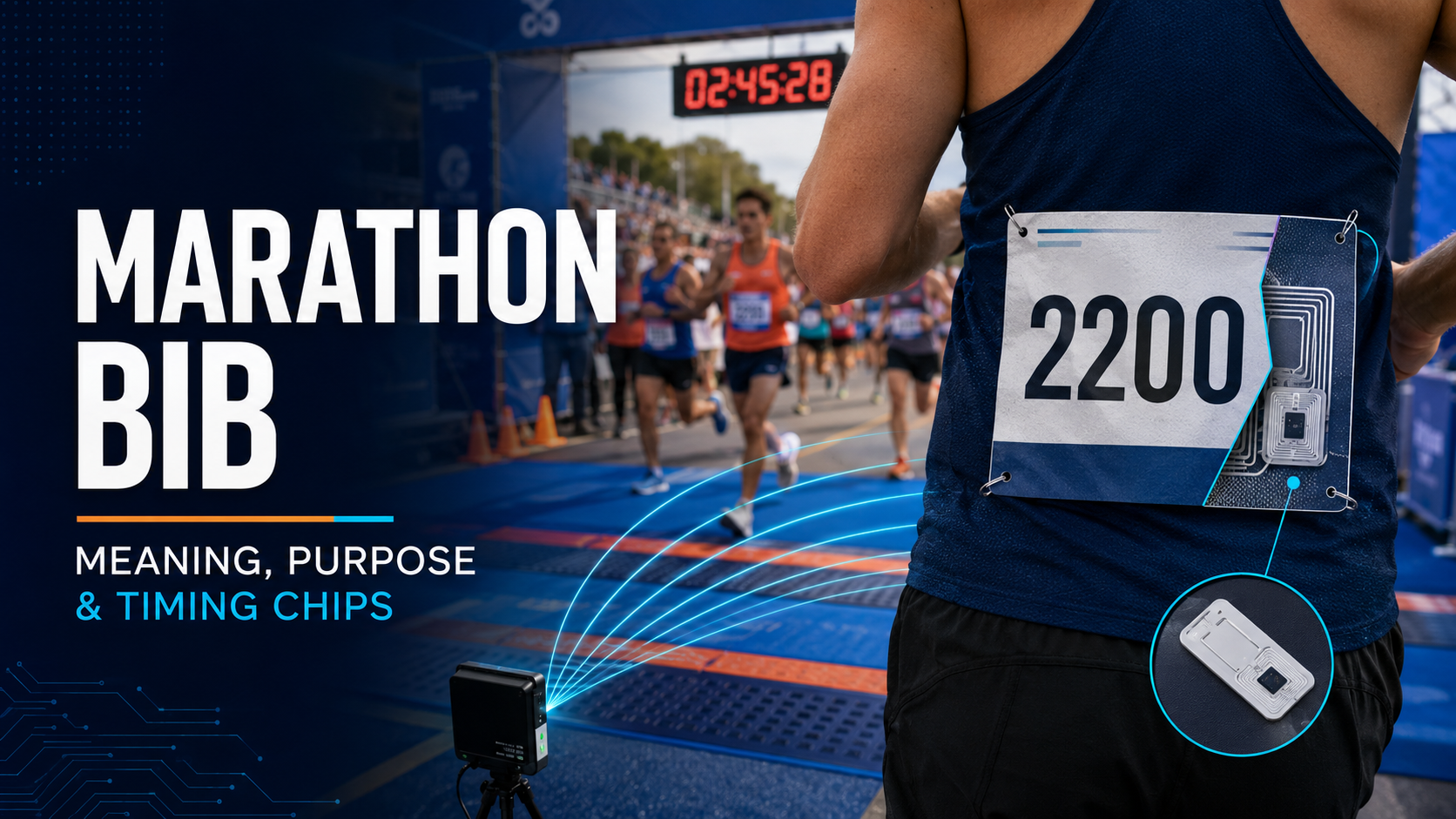
How Chip Timing Works: A Complete Guide to Race Timing Technology.

Discover how chip timing technology delivers accurate and reliable race results for marathons, half marathons, 10K, 5K, and other running events. Learn how RFID timing chips, timing mats, checkpoints, net time, and gun time work together to record every participant’s performance.I can also create a short 1-line excerpt or a WordPress SEO excerpt under 160 characters.
Introduction
In a running event, every second matters. Whether you are participating in a marathon, half marathon, 10K, 5K, or fun run, accurate timing is essential for measuring performance and determining race results.
Modern running events use chip timing technology to automatically record the time when participants cross the start line, timing checkpoints, and finish line.
At Sportifi India, chip timing technology helps event organizers deliver accurate, reliable, and professional race results while giving participants a better race experience.
What Is Chip Timing?
Chip timing is an electronic race-timing system that uses a small RFID timing chip attached to a participant's race bib.
Each timing chip contains a unique identification number. Before the event, the chip is linked to the participant's registration details, including:
• Runner's name
• Bib number
• Event category
• Registered race distance
• Age group
• Gender category
When the participant crosses a timing mat, the system detects the chip and automatically records the exact time.
How Does Chip Timing Work?
Chip timing works through a combination of RFID technology, timing mats, antennas, timing equipment, and race-management software.
Step 1: Participant Registration
When a participant registers for a running event, a unique race bib is assigned.
The timing chip attached to the bib is connected to the participant's registration information in the event timing system. This ensures that every timing record is matched with the correct runner.
Step 2: Timing Mats Are Installed
Timing mats and RFID antennas are placed at important locations along the race route.
Common timing locations include:
• Start line
• 5 KM checkpoint
• 10 KM checkpoint
• Halfway point
• Turnaround point
• Intermediate checkpoints
• Finish line
These timing points are connected to specialized timing equipment and race-management software.
Step 3: The Runner Crosses the Timing Mat
When a runner passes over a timing mat, the RFID system detects the unique chip attached to the race bib.
The system automatically records:
• Participant identification
• Bib number
• Timing location
• Date
• Exact crossing time
The runner does not need to stop, scan the bib, or interact with any equipment.
Step 4: Timing Data Is Processed
The timing data is transferred to race-management software.
The system matches the chip identification number with the participant's registration details and calculates the runner's performance.
The timing system can generate:
• Start time
• Finish time
• Net time
• Gun time
• Split times
• Overall ranking
• Gender ranking
• Age-category ranking
Step 5: Race Results Are Published
After the event, results can be published on the event website or an online results platform.
Participants may search for their results using:
• Name
• Bib number
• Registration number
Depending on the event, participants may also receive:
• Digital finisher certificates
• Timing reports
• Split-time information
• Race rankings
• Finisher records
Gun Time vs Net Time
Chip timing usually provides two important timing measurements: gun time and net time.
What Is Gun Time?
Gun time is calculated from the official race start until the participant crosses the finish line.
For example: if the race officially starts at 6:00 AM and a participant finishes at 7:00 AM, the gun time is 1 hour.
Gun time includes any time spent waiting to cross the start line.
What Is Net Time?
Net time, also known as chip time, is calculated from the moment a participant crosses the start line until they cross the finish line.
For example: if a participant crosses the start line at 6:05 AM and finishes at 7:00 AM, the net time is 55 minutes.
Net time is especially useful in large running events where participants may take several minutes to reach the start line.
Why Are Timing Checkpoints Important?
Timing checkpoints help organizers track participant progress and verify that runners follow the official race route.
For longer races, timing points may be installed at locations such as:
• 5 KM
• 10 KM
• 15 KM
• 21.097 KM
• 25 KM
• 30 KM
• 35 KM
• 42.195 KM
These checkpoints provide split-time information and help participants understand their pace throughout the race.
Timing checkpoints also support fair and transparent results by confirming that participants completed the required route.
Benefits of Chip Timing for Runners
Chip timing improves the race experience in several ways.
Accurate Personal Timing
Participants receive an individual timing record based on their actual start and finish times.
Detailed Performance Information
Runners can view important information such as:
• Finish time
• Net time
• Gun time
• Pace
• Split times
• Overall rank
• Gender rank
• Age-category rank
Faster Results
Race results can be processed and published quickly after the event.
Better Race Experience
Participants can access their results online and may receive digital certificates and finisher information.
Benefits of Chip Timing for Event Organizers
Chip timing also helps organizers manage events more efficiently.
Accurate and Reliable Results
Automated timing reduces the risk of manual timing errors.
Efficient Event Management
The system can manage timing data for a large number of participants.
Route Verification
Timing checkpoints help confirm that participants followed the official race route.
Professional Event Experience
Accurate timing and organized results improve the quality and credibility of the event.
Event Data and Analysis
Organizers can use timing data to analyze:
• Participant performance
• Checkpoint activity
• Race completion rates
• Event participation
• Race operations
Tips for Runners to Ensure Accurate Chip Timing
Participants should follow these important guidelines:
• Wear the official race bib on the front of your shirt.
• Keep the bib clearly visible.
• Do not fold, tear, or damage the race bib.
• Do not remove or alter the timing chip.
• Do not cover the chip with metallic materials.
• Do not exchange your bib with another participant.
• Cross every official timing mat during the race.
• Follow the official race route.
A damaged, incorrectly placed, or altered race bib may affect timing detection.
Frequently Asked Questions
1. What is a chip-timed race?
A chip-timed race uses an electronic RFID timing chip to automatically record a participant's time at the start line, timing checkpoints, and finish line.
2. Where is the timing chip placed?
In most running events, the timing chip is attached to or integrated into the participant's race bib.
3. Do I need to activate the timing chip?
Usually, no. The timing chip is generally assigned and configured by the event organizer before the race.
4. What happens if my chip is not detected?
If the chip is not detected, the participant's timing record may be incomplete or unavailable. Participants should ensure that the race bib is worn correctly and is not damaged.
5. Is chip time more accurate than manual timing?
Chip timing provides automated individual timing records and is generally more efficient and reliable than manual timing, especially for large running events.
6. What is the difference between gun time and net time?
Gun time starts from the official race start, while net time starts when the participant crosses the start line.
7. Can I transfer my race bib to another person?
No. Race bibs should not be exchanged or transferred because each timing chip is linked to a specific participant's registration details.
8. Why do I need to cross all timing mats?
Timing mats record split times and help verify that participants followed the official race route.
Conclusion
Chip timing is an important part of modern running events. Using RFID technology, timing mats, and race-management software, it automatically records participant timing at the start line, checkpoints, and finish line.
For runners, chip timing provides accurate performance information and reliable race results. For organizers, it supports efficient event management, transparent rankings, and a professional event experience.
Whether you are participating in a 5K, 10K, half marathon, or full marathon, chip timing helps ensure that every important moment of your race is accurately recorded.