The Importance of Technology in Marathon and Running Events

A simple guide to how technology improves marathon registration, RFID timing, safety, and race management for organizers of running events of any size.
Running a marathon takes months of training. Organizing one takes months of planning, hundreds of tasks, and thousands of small decisions. Not long ago, all of this was done on paper. Registration forms were filled by hand, payments were collected in cash, and finish times were noted by volunteers with stopwatches. Results took days to publish, and mistakes were common.
Today, everything has changed. From the moment a runner signs up to the moment they download their certificate, technology quietly runs the show. This article explains, in simple terms, why technology has become essential for anyone organizing a running event.
Registration made simple
Online registration is usually the first piece of technology an organizer adopts, and for good reason. Runners can sign up from their phone in a few minutes, pay securely, and receive an instant confirmation. There are no lost forms, no cash to count, and no duplicate entries.
Modern marathon registration software also handles the difficult parts automatically: discount codes, group and corporate registrations, waiting lists, refunds, and bib transfers. What once needed a team of people now needs almost no manual work at all. Events that move from paper to online registration almost always see their numbers grow, simply because signing up becomes easy.
Reaching runners through digital marketing
A race is only as big as its start line. Social media, Google ads, email, SMS, and WhatsApp help organizers reach runners at a fraction of the cost of print advertising. More importantly, digital marketing can be measured. Organizers can see exactly which channel brought each registration and spend their budget where it actually works. Even a small local run can fill up quickly with a good event page, a few well-timed posts, and a QR code on a poster.
Accurate timing with RFID chips
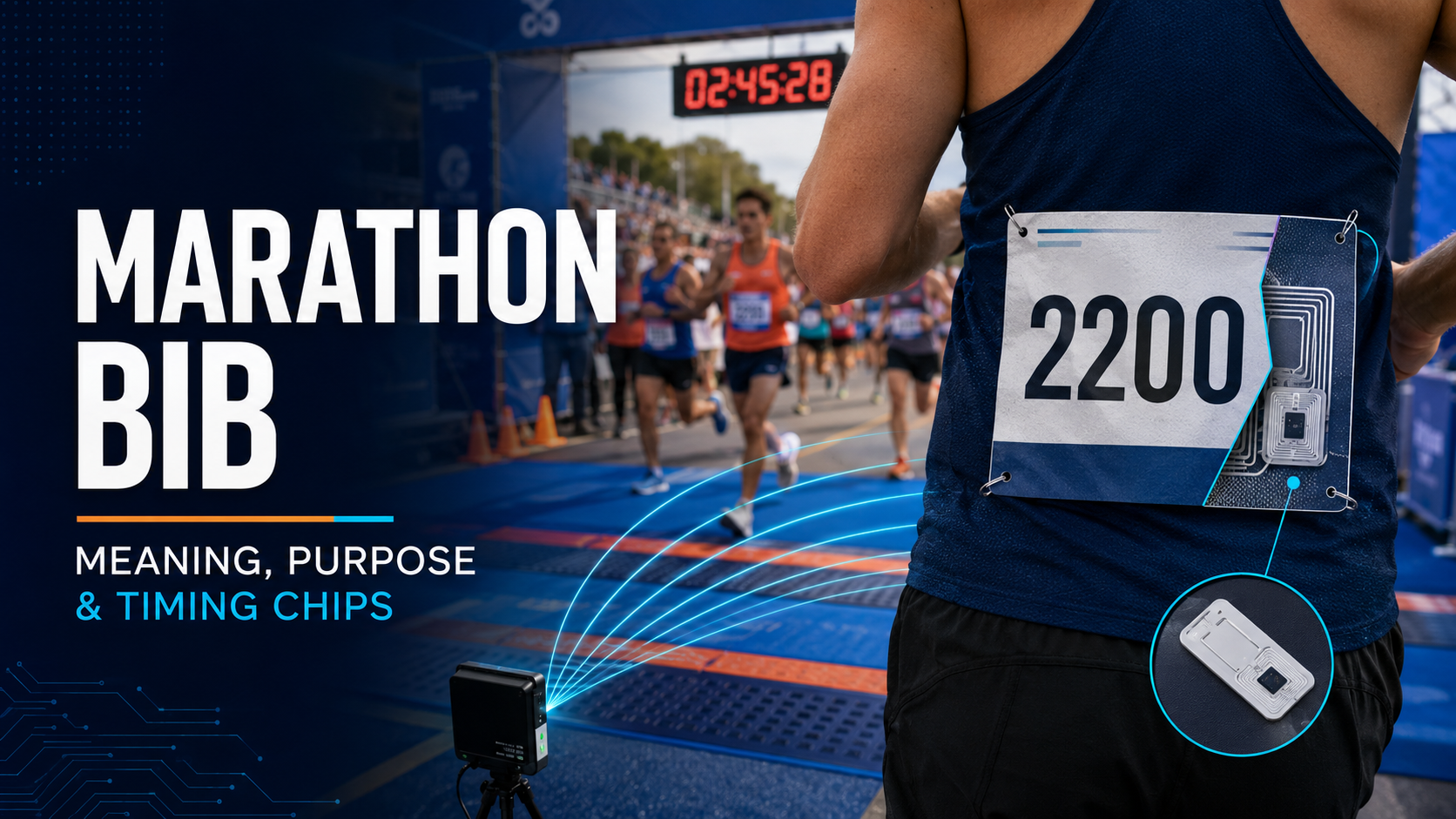
Timing is where technology has made the biggest difference to runners themselves. A small RFID chip on the bib or shoe is detected by timing mats at the start, the finish, and points along the route. Every runner gets an exact personal time, called chip time, no matter how far behind the start line they began.
This makes racing fair. Split times at checkpoints show pacing and help detect anyone cutting the course. Results reach runners by SMS within seconds of finishing, and live leaderboards let spectators follow the race as it happens. For an organizer, this means no protests, no delays, and no doubts about the results.
A better experience for every runner
Technology touches every step of the runner journey. A QR code on the phone replaces printed tickets at bib collection, cutting long queues to a few seconds per person. Family members follow their runner live on a map. After the finish, the runner gets an instant result, a digital certificate the same day, and photos they can find by searching their bib number. Most runners share these online, which becomes free promotion for the next edition.
Control for the organizer
Behind the scenes, a good race management platform gives the organizing team one dashboard for everything: live registration numbers, income and expenses, volunteer schedules, vendor payments, and sponsor deliverables. Instead of juggling spreadsheets and phone calls, the race director sees the full picture in real time and can act before small problems become big ones. The data also helps with sponsors. An organizer who can show clear numbers on participants, demographics, and reach will always negotiate better sponsorships.
Safety comes first
Perhaps the most important role of technology is keeping people safe. Organizers can send an emergency message to every runner within minutes if the weather turns or the route changes. Medical teams can be directed to an exact location on the course. If a runner has not crossed a checkpoint long after their expected time, sweep teams can be sent to look for them. These are things no amount of manpower can do as fast as a connected system.
Less paper, less waste
Digital registration, e-waivers, online race instructions, and digital certificates remove enormous amounts of paper and printing from an event. Accurate registration data also means organizers order the right number of T-shirts, medals, and meals instead of guessing. A greener event costs less and appeals to both runners and sponsors.
What is coming next
The next few years will bring even more change. Artificial intelligence is already answering runner questions through chatbots, drafting marketing content, and predicting risks like heat stress. Face recognition helps runners find their photos instantly. Wearables and smart devices will feed live health data to medical teams. Organizers do not need to adopt everything at once, but those who keep ignoring technology will slowly lose runners to events that feel more modern and professional.
One platform instead of many tools
The final lesson is about integration. Many organizers use one tool for registration, another for marketing, spreadsheets for finance, and a separate system for timing. Every gap between these tools is a place where data gets lost and errors hide. Platforms like Sportifi show a different approach: registrations, event planning, marketing, bib expo, timing, communication, finance, and analytics working together as one system, often called an Organizer Operating System. When everything shares the same data, a registration automatically becomes a payment record, an expo QR code, a timing entry, and a line in the finance report. The team saves time, and the event simply runs smoother.
Conclusion
Marathons are, and always will be, about people. Technology does not replace the human spirit of a running event; it protects it. It makes registration painless, results instant, communication reliable, and race day safer. Whether you are organizing your first 5K or a full city marathon, the advice is the same: build your event on a strong digital foundation. Your runners will feel the difference at every step, and your team might finally get to enjoy race day too.